About
I’m Rachel Hills, a journalist, author, and cultural critic interested in the stories and ideas that quietly organize our lives. For two decades, I’ve written about feminism, culture, politics, identity, relationships, and power, with work published in The New York Times, The Atlantic, The Washington Post, The Guardian, TIME, Vogue, Harper’s Bazaar, New York Magazine, and other publications.
My first book, The Sex Myth (Simon & Schuster, 2015), challenged conventional narratives about sex and relationships. Based on six years of research and more than 200 interviews, it was named one of the year’s best books by The New York Times’ Women in the World and sparked conversations about sexuality, identity, and equality around the world. It was later adapted into a sold-out off-Broadway play, developed as an activist resource, and optioned for television and podcast adaptation.
I’m currently developing Having It All, a nine-part documentary podcast tracing fifty years of changing ideas about women, work, family, and ambition. The project combines archival research, cultural history, media analysis, and original reporting to tell the surprising story behind one of feminism’s most enduring ideas.
My work also spans fiction and nonfiction. I’m currently working on two novels, Live Beautiful and Everyone Is Watching Charlotte Quinn, and I’m the author of A Mother Is a Person, a feminist memoir-manifesto about motherhood, selfhood, and the cultural and economic forces that shape women’s lives, currently on submission. I also write two newsletters: Heart Talk, about the private experiences that shape the way we understand our lives, and Having It All, on women, work, motherhood, and ambition.
My work has also moved beyond the page. I executive-produced the off-Broadway adaptation of The Sex Myth, have spoken at Harvard, Cornell, the Sydney Opera House, and other universities and cultural institutions internationally, and spent seven years running Protagonistic, a narrative and communications consultancy working on gender and social impact. That work won two Anthem Awards, including for projects on girls’ rights and gender-responsive climate finance.
Across all of these projects, I’m interested in the same underlying question: how do the stories we inherit shape what we believe is possible for our lives — and what changes when we tell those stories differently?
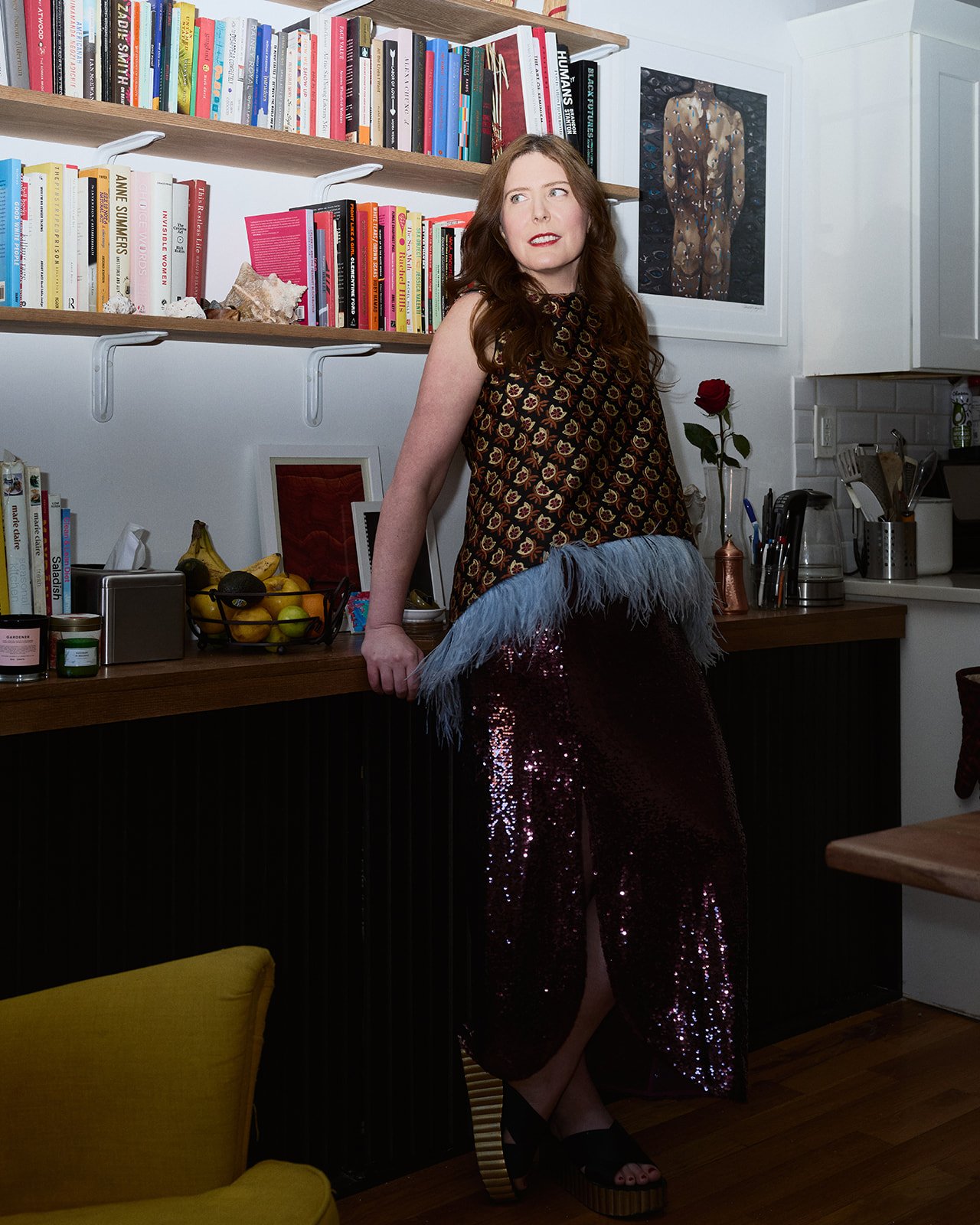
Photo by Katie Ward